


When we talk about sweatshirts, we have to talk about fabric.
Knit Fabric: what is it?
Sweatshirts, like t-shirts, cannot be sewn with just any fabric; to make them, you must choose what is called "knit" fabric.
“Knit” fabrics are knitted fabrics as opposed to “warp and weft” fabrics which are woven.
Due to their particular knitted texture, knit fabrics have the property of being stretchable; which will allow us to pass the head through the round neck without needing to open a zipper or buttons.
Knit fabrics are comfortable fabrics that will hug the curves of the body; they are used notably for lingerie such as jersey panties or for bodysuits. Since Mademoiselle Coco Chanel, knit fabric is also worn in the city; think of the famous Breton shirts, t-shirts, and sweatshirts.

Choosing your knit fabric to make a sweatshirt
Choose a relatively heavy knit fabric:
- a sweatshirt fabric,
- a heavy jersey,
- a fleece,
- a milano
- an interlock
- ...
 Fancy jersey
 fleece and heavy jersey
 textured jersey
Refer to the labels and do not hesitate to test the elasticity of your fabric.
I advise you to choose a fabric with an elasticity of more or less 40%, that is to say, when you stretch 10cm of your fabric lengthwise, you will see it grow up to 14cm. The jersey must regain its shape after stretching. If it remains loose, it is of poor quality. In that case, move on.
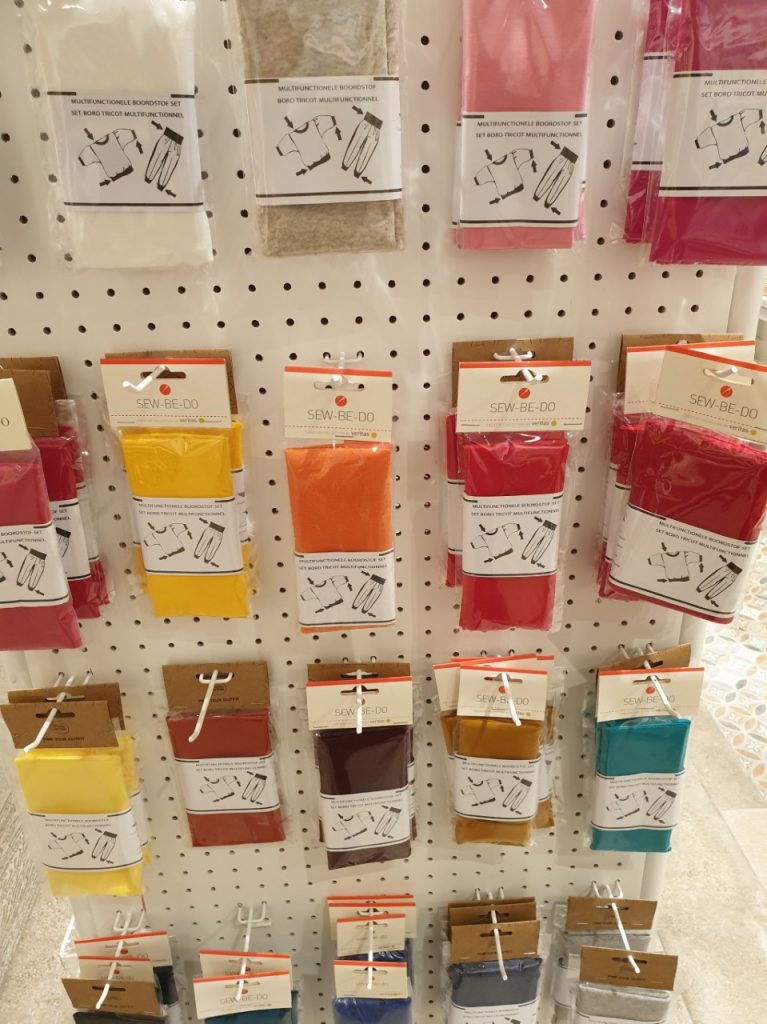
For the finishes, you can choose a ribbed edge. There are now many with sequins, in lurex, with large ribs... which allows for a lot of creativity.

How to sew knitwear?
Knitwear can be sewn in two ways for assembly:
- or with the serger (4-thread)
- either with the sewing machine taking care to use a stretch stitch.
For my part, I prefer to use the serger because it allows very clean, almost professional finishes.
To sew knitwear, you will also need to adapt your needle(s) and choose those of the jersey or stretch type. These needles have the particularity of having a rounded tip that allows the needle to slide against the stitches so as not to break or tear them or make holes in the fabric texture.

For hems and finishes, you will have several choices:
- or application of ribbing (with the serger or sewing machine)
- finishing with double needle topstitch, or single (zigzag stitch, decorative stitch as long as it is stretchy)
- rolled hem stitch for t-shirts or other pieces using fine jersey
- application of an elastic bias.

The sweatshirt
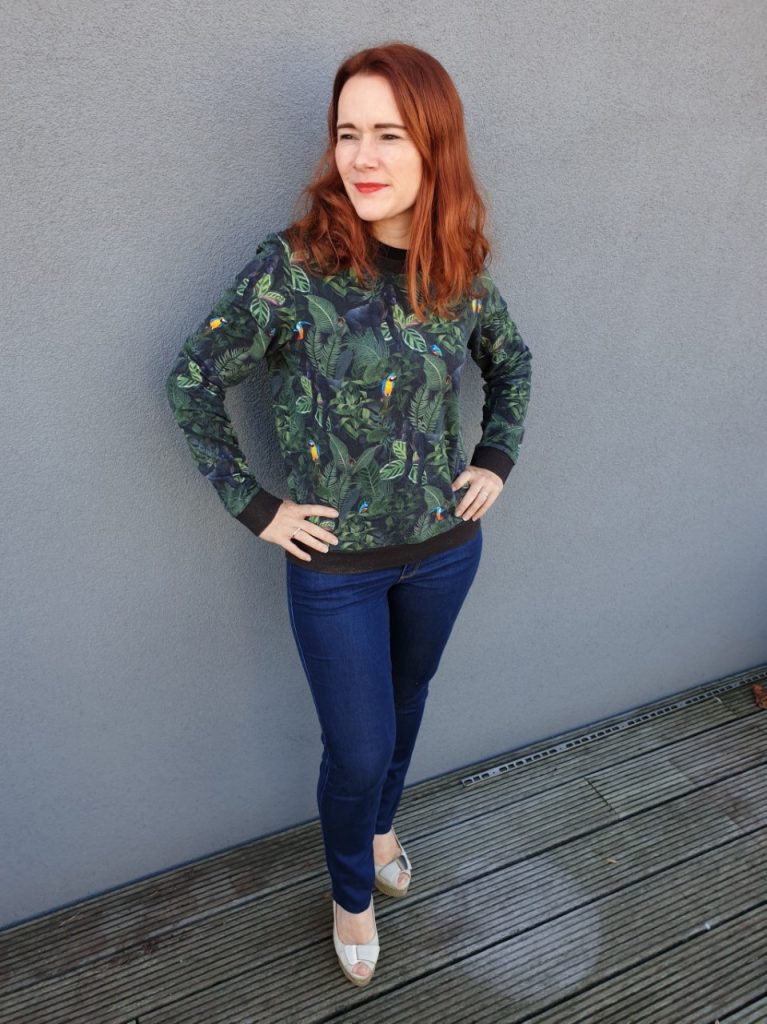
There are many sweatshirt models with simple sleeves, raglan, pleated effect... For my part, I prefer classic models and choose original and colorful fabrics.
 Raglan sleeves
To choose your size, there are two types of methods depending on the pattern you have selected:
- classic size chart: just take your measurements
- measurement of a similar pre-existing garment: you will need to measure a sweatshirt you own (without stretching it, measure it flat).
For the second technique, it is normal that the measurements do not correspond to your measurements. They will be smaller since the fabric is stretchy.
Generally, the sweatshirt consists of 8 pieces:
- a back cut on the fold
- a front cut on the fold
- two sleeves
- a band to finish the bottom
- two cuffs
- a neckline band.
My sewing projects
 LMV - Fenna
I made some sweatshirts with classic and raglan sleeves.
I'll show them to you ;-)
Some come from different patterns from La Maison Victor (LMV):
- the Bloom sweatshirt editions May-June 2017
- the Lana sweatshirt Editions January-February 2019 (without zipper)
- the Fenna sweatshirt Editions January-February 2018
And then the others are simple modifications of bodice patterns with more or less creativity ;-)
 LMV - Bloom
 LMV - Bloom
 House pattern
 LMV- Lana
I sew sweatshirts with the serger. The serger allows for very nice finishes and a considerable time saving. If you are experienced, you can sew your sweatshirt in 1 hour as long as it is simple. Allow more time for the Fenna pattern.
The fabrics used come from Véritas, Tissus.net and La Maison Dorée.
So tempted to create your own designs for this autumn-winter season?
